
 +92 300 1110365
How Property CRM Reduces Lead Leakage in UAE Real Estate
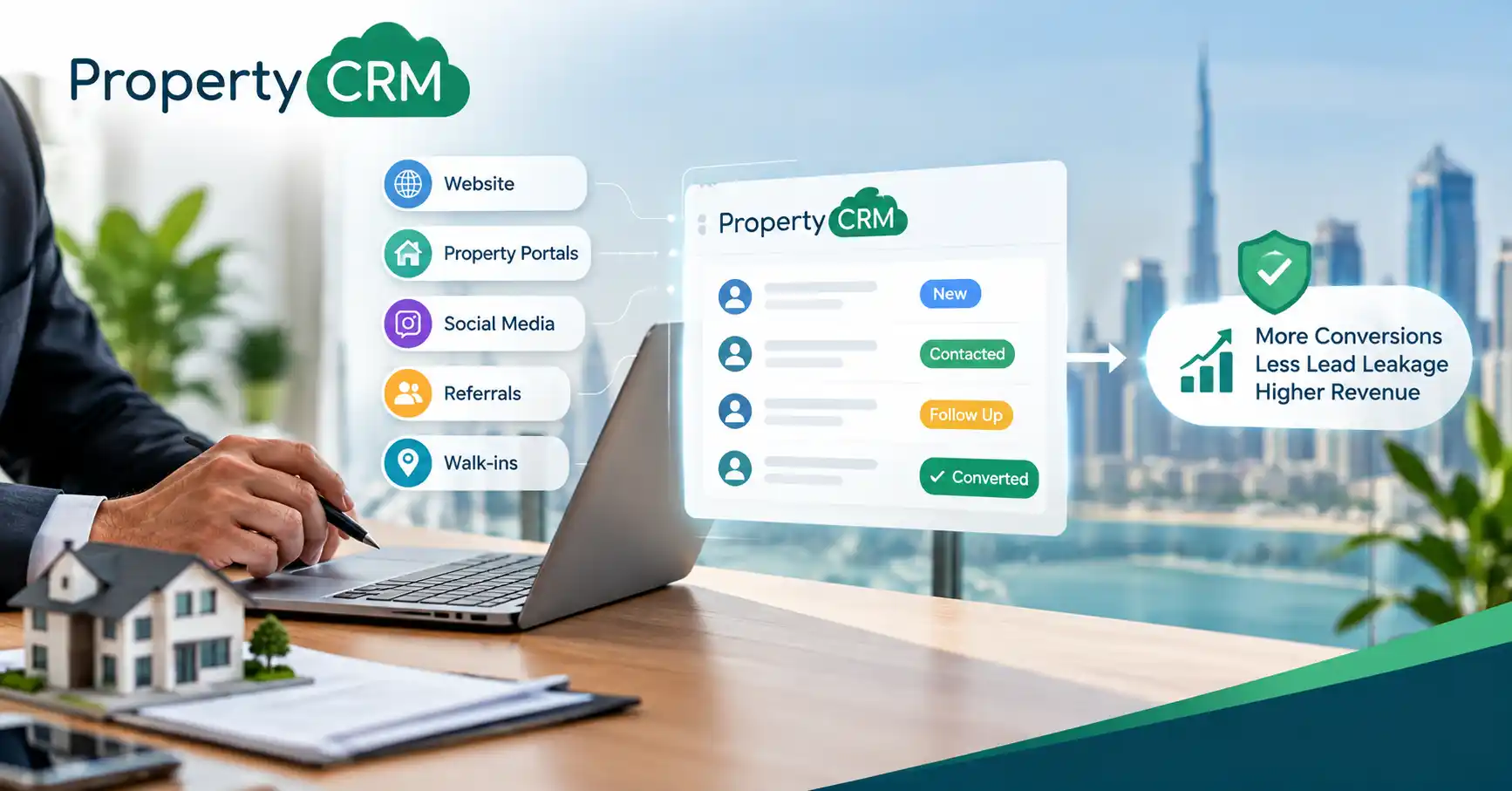
There’s a lead is generated through Property Finder at 9 AM. But it is not noticed until 4 PM, when it sits on a realtor’s WhatsApp mixed with other inquiries for the entire day. By the time you reply, your client is already being contacted by another agency. That’s the story of lead leakage summed up in one sentence, and it continues to happen over and over again once inquiries come flooding in through portals, social media, websites, and WhatsApp, but not all are managed by a single system.
That’s where Property CRM comes in, making sure all your inquiries are collected in one spot, assigned to the correct agent, and checked whether follow-ups were done. Here at Property CRM, that’s the common challenge UAE agencies bring us once they realize how many leads went unnoticed through their fingers.
What Is Lead Leakage in UAE Real Estate?
Lead leakage covers a handful of specific failures. All of them are more common than agencies like to admit:
- Missed inquiries that never got a response at all
- Delayed responses that hand the deal to a faster competitor
- Leads sitting in personal WhatsApp accounts nobody else can see
- Unassigned leads with no agent actually owning them
- Forgotten follow-ups that quietly went cold
How Does a Property CRM Reduce Lead Leakage?
1. Centralized Lead Capture
Inquiries land from more places than most teams track manually:
- Property portals
- Website forms
- Social media
- Advertising campaigns
Pulling leads from Property Finder, Bayut, and Dubizzle into one place is basically table stakes for UAE real estate CRMs now, not some bonus feature. Skip it, and half your leads end up sitting in five different inboxes nobody’s checking at the same time.
2. Instant Lead Distribution
Once a lead’s captured, it needs to reach someone fast, and that runs on:
- Automatic assignment the second a lead comes in
- Round-robin distribution across the team
- Agent availability, so it doesn’t land on someone who’s off that day
- Area specialization, matching leads to agents who actually know that neighborhood
- Instant notifications, so nobody finds out about a hot lead hours later
3. Automated Follow-Up
Capturing a lead is step one. Keeping it alive is the real work, and automation carries most of that weight:
- Follow-up reminders that don’t rely on someone’s memory
- WhatsApp messages sent at the right moment
- Email follow-ups for anything needing more detail
- Lead nurturing for buyers who just aren’t ready yet
- Stagnant-lead alerts flagging anything that’s gone quiet
4. Property and Buyer Matching
Property matching connects buyer requirements to what’s actually available, running from budget and location through to property type and current inventory. In practice, that means matching a buyer looking in Dubai Marina against real listings there, not just any villa sitting in the system. Same logic for Downtown Dubai apartments, off-plan units, or standalone villas, whatever the buyer’s actually asking for.
Property CRM vs. Manual Lead Management
| Feature | Manual Management | Property CRM |
| Lead capture | Multiple sources | Centralized |
| Lead assignment | Manual | Automated |
| Follow-up | Agent dependent | Scheduled |
| Communication | Scattered | Centralized |
| Property matching | Manual | System-assisted |
| Reporting | Spreadsheet-based | Dashboard |
| Lead monitoring | Difficult | Real-time |
How Property CRM Improves Lead Response Time
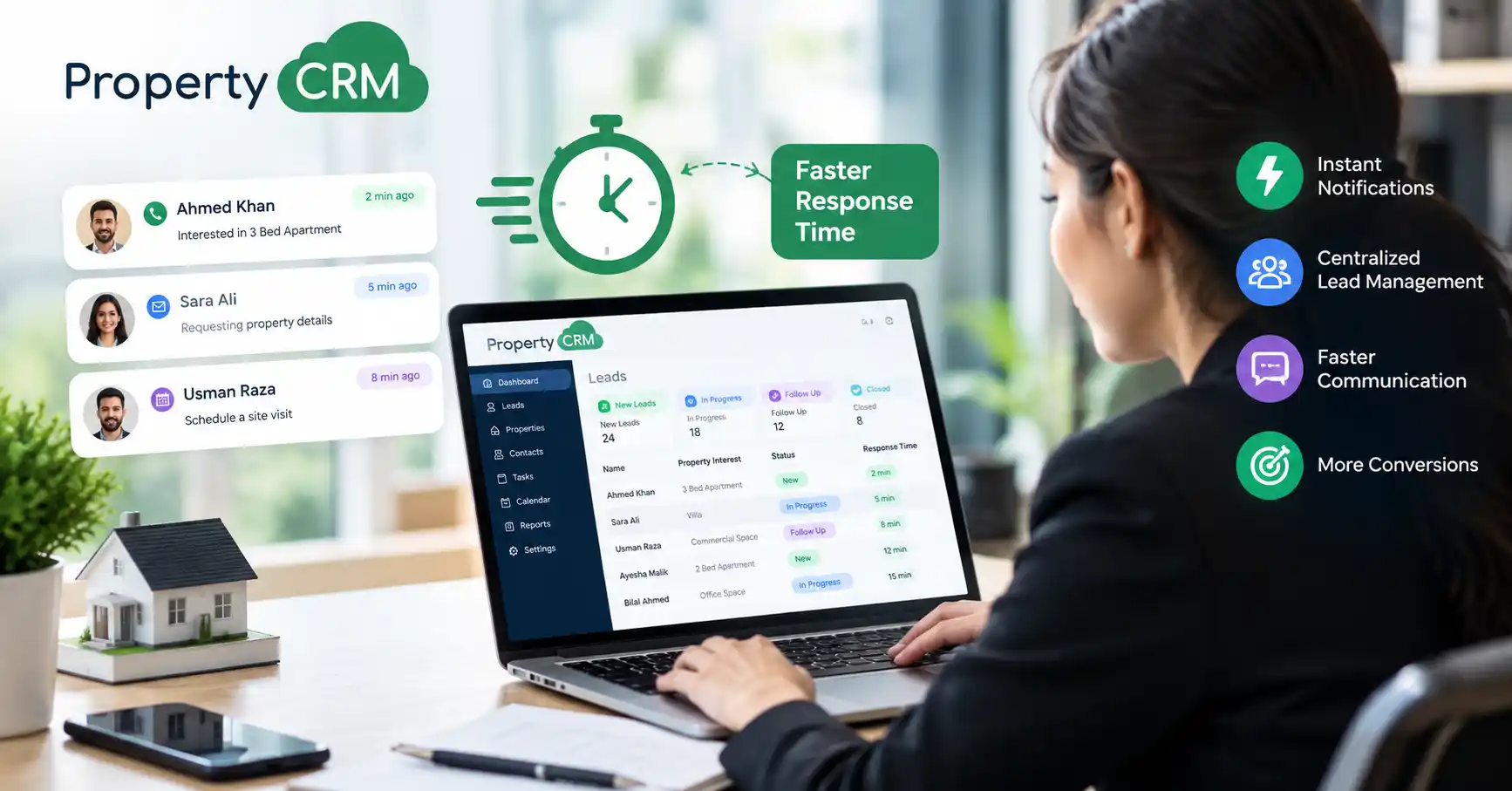
Speed to lead matters more in Dubai real estate than a lot of agencies account for. When clients browse Property Finder, it’s most likely that they’re sending inquiries to more than one realtor at a time, which means that whoever responds first ends up winning the discussion even before the discussion has started. With a CRM, this is resolved using instant notifications, immediate assignment upon arrival of leads, marking of important inquiries, measurement of response times to be able to know how quick you are as a team, among other features.
Not sure how your current setup actually stacks up on speed to lead? Property CRM can walk you through it. Call +971 457 13703 or +92 300 1110365, or email info@propertycrm.net.
How CRM Helps UAE Agencies Track Lost or Stagnant Leads
Managers need to see what’s stuck, not just what’s active. A proper system flags:
- Leads without a first response
- Leads awaiting follow-up that never happened
- Leads with no activity for a while
- Leads stuck at a particular pipeline stage
- Leads that need reassigning to someone else
Skip this kind of tracking, and stagnant leads just sit there quietly. Nobody finds out until the buyer’s already signed with someone else.
Key Benefits of Property CRM for UAE Real Estate
Once it’s actually running, the practical wins tend to look like this:
- Fewer missed inquiries slipping through the cracks
- Faster lead distribution across the team
- Consistent follow-up that doesn’t hinge on any one agent remembering
- Better customer communication overall
- Clear agent accountability for every lead assigned
- Better pipeline visibility for managers
What to Look for in a Property CRM in the UAE?
Evaluating options? Focus on what actually matters for this specific problem:
- Multi-channel lead capture
- Property portal integrations, including the major UAE platforms
- WhatsApp integration, since so much buyer communication happens there anyway
- Automated lead assignment
- Follow-up automation
- Property matching
- Pipeline management
- Reporting and analytics
- Mobile access for agents out in the field
- Role-based access for managers versus agents
Conclusion
The problem of lead leakage is not caused by agencies trying too little; the reason why it happens is that leads are distributed across different channels like portals, WhatsApp, and individual inboxes, which do not have anyone overseeing them collectively. The Property CRM helps solve this problem with lead capture, lead routing, and follow-up that don’t depend on any one individual.
If the problem of lead leakage is occurring due to your existing system, then you should see how centralized systems work for your team. You can contact us at +971 457 13703, +92 300 1110365, or info@propertycrm.net.
Frequently Asked Questions
What is a Property CRM in real estate?
Software built to capture, distribute, and track real estate leads in one system, replacing scattered spreadsheets and personal WhatsApp chats with something everyone can actually see.
How does a CRM prevent lead leakage?
By capturing every inquiry in one place, automatically assigning it to an agent, and tracking follow-up so nothing sits unanswered without anyone noticing.
How can real estate companies manage leads in the UAE?
By centralizing inquiries from portals, websites, and WhatsApp into one CRM, then using automated assignment and follow-up to keep every lead actively moving.
How does CRM improve real estate lead management?
It replaces manual, scattered processes with centralized capture, instant routing, automated follow-up, and real-time visibility for managers watching the pipeline.
Why is speed to lead important in Dubai real estate?
Because Dubai buyers often contact several agencies at once, and a faster response frequently decides which agency actually lands the deal.
How does a Property CRM automate follow-ups?
By scheduling reminders, sending WhatsApp and email messages at set intervals, and flagging leads that have gone quiet for reassignment or another attempt.
Can a CRM integrate Property Finder and Bayut leads?
Yes. Most UAE-focused real estate CRMs integrate directly with major portals like Property Finder and Bayut, pulling inquiries into one centralized system automatically.
How does a CRM help real estate agents convert more leads?
Through faster response times, consistent follow-up, and better property matching, all of which cut down on how often a buyer just goes cold.





No comment