
 +92 300 1110365
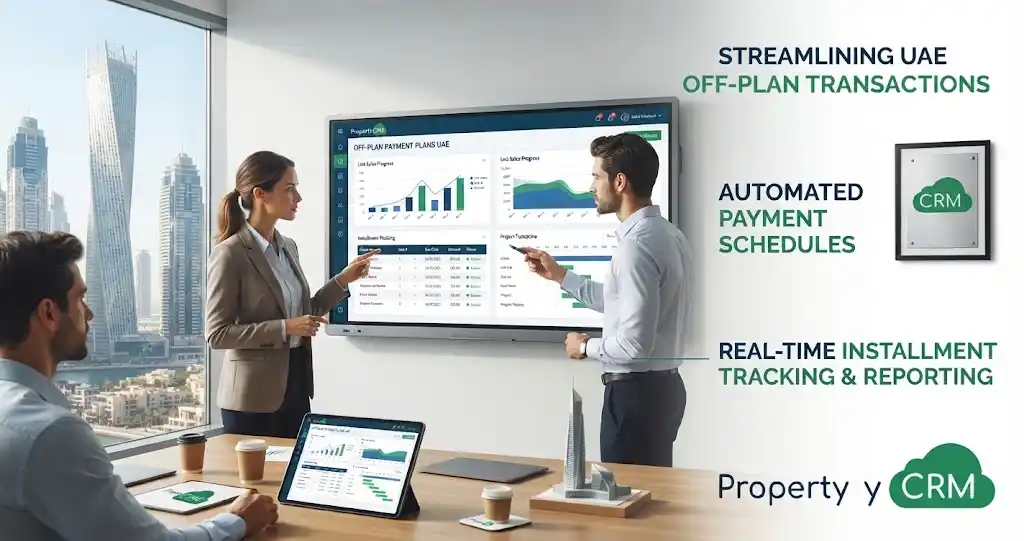
Managing Off-Plan Payment Plans & Installments with Property CRM in UAE
Property CRM helps UAE real estate companies manage off-plan payment plans by pulling installment schedules, due dates, payment status, buyer records, and property information into one system instead of five. That’s the short answer, and it’s worth saying upfront because most teams already know they need it. What they usually don’t have is a good way to actually do it.
Construction-linked and post-handover installments sound simple on paper. In practice, once you’re juggling dozens of buyers across different units and projects, each on a slightly different schedule, a spreadsheet stops being a tool and starts being a liability.
What Are Off-Plan Payment Plans in the UAE?
Buyers of off-plan property rarely pay the full price upfront. Instead, the amount gets split into stages tied to either construction progress or the calendar. The common structures you’ll run into are:
- Construction-linked payments
- Time-linked installments
- 50/50 and 60/40 plans
- Deferred payment plans
- Post-handover plans
- 1% monthly plans
Each one shifts risk and cash flow differently between the buyer and the property developer, which is exactly why tracking them properly matters so much.
Why Off-Plan Installment Management Is Difficult for Real Estate Teams
On paper, none of this looks hard. In practice, it adds up fast:

- Multiple payment schedules running in parallel, each with its own logic
- Different buyers tied to different units, all moving at their own pace
- Construction milestone tracking that depends on updates from the site, not the office
- Keeping upcoming and overdue installments visible without digging through files
- Manual spreadsheets and endless follow-up emails that eat up someone’s whole week
This is where a Property CRM turns a messy payment schedule into something an actual team can manage without losing track of who owes what.
How Property CRM Manages Off-Plan Payment Plans
This is really the heart of the whole thing, so let’s walk through it properly.
Create and Assign Payment Schedules
A payment plan gets linked directly to the buyer, the project, the unit, the purchase price, the installment percentage, and the installment due date. Once it’s set up, everyone working the file sees the same numbers, not five different versions across five inboxes.
Track Paid, Pending, and Overdue Installments
Every installment moves through a clear status: paid, upcoming, pending, or overdue. Instead of chasing this information down manually, the team gets it at a glance, which sounds small until you’re managing forty units at once.
Automate Payment Reminders
Reminders go out ahead of installment due dates, upcoming construction milestones, the handover payment, and any outstanding balance still sitting on an account. Nobody has to remember to send them, because the system already knows the dates.
Maintain Complete Payment History
Each buyer’s record holds their full payment history, right alongside outstanding amounts and the related property details. If a buyer calls asking what they’ve paid so far, there’s no need to dig through old folders to answer them.
Construction-Linked vs Time-Linked Payment Plans
These two structures work very differently, and it’s worth seeing them side by side.
| Feature | Construction-Linked | Time-Linked |
| Payment trigger | Project milestone | Fixed date |
| Tracking | Construction progress | Calendar |
| CRM requirement | Milestone tracking | Automated due dates |
| Main challenge | Verifying progress | Avoiding missed dates |
Construction-linked plans need someone confirming that a milestone was actually hit before payment gets requested. Time-linked plans are simpler on paper, but missing a date is just as costly, so automated reminders matter either way.
Managing Different Off-Plan Payment Structures in Property CRM
Each structure needs a slightly different approach, though the underlying system stays the same:
- 50/50 Plan: track the construction-stage payments and the handover balance separately
- 60/40 Plan: keep an eye on the larger construction-stage portion, then the remaining handover amount
- 80/20 Plan: track the smaller construction payments while preparing for a bigger obligation at handover
- Post-Handover Plan: keep tracking installments even after the buyer has already taken the property
- 1% Monthly Plan: manage a steady stream of recurring monthly installments and reminders without letting any slip
What Should a Property CRM Track for Off-Plan Installments?
If you’re setting one up or evaluating a new system, this is roughly what it needs to cover:
- Buyer details
- Project and unit
- Total property value
- Booking deposit
- Installment percentage
- Installment amount
- Due date
- Payment status
- Outstanding balance
- Construction milestone
- Handover date
- Payment history
Miss any of these, and someone ends up filling the gap manually, which defeats the purpose of using a CRM in the first place.
Property CRM vs Spreadsheet for Payment Tracking
Most teams start on spreadsheets. Here’s roughly where that approach starts to break down.
| Feature | Spreadsheet | Property CRM |
| Payment schedules | Manual | Centralized |
| Reminders | Manual | Automated |
| Buyer records | Separate | Linked |
| Outstanding payments | Manual checking | Dashboard |
| Payment history | Multiple files | One record |
| Reporting | Time-consuming | Faster |
| Team visibility | Limited | Shared |
None of this means spreadsheets are useless. They just don’t scale once you’re tracking dozens of buyers with overlapping schedules and multiple properties in different phases.
Want to see how this would work for your own project pipeline? Property CRM can walk you through it directly at info@propertycrm.net or +971 457 13703.
Keeping Off-Plan Payment Records Organized in the UAE
There’s a compliance side to all this too, and it’s worth being upfront about where a CRM fits. It’s a record-management and workflow tool, not a substitute for legal or regulatory advice. That said, keeping the right records organized alongside your payment tracking makes life a lot easier, including:
- Oqood registration
- Dubai Land Department (DLD) filings
- RERA requirements
- Escrow account confirmations
- Sales and Purchase Agreement (SPA) details
- Payment confirmations
Having these linked to the buyer’s payment record means nothing gets separated from the transaction it belongs to.
Benefits of Managing Off-Plan Installments with Property CRM
Once it’s actually running, the day-to-day difference is pretty noticeable:
- Fewer missed payment deadlines across the board
- Better visibility into outstanding amounts, without chasing anyone for an update
- Automated customer reminders that don’t rely on someone remembering to send them
- A centralized buyer payment history that’s actually easy to find
- Easier project-level reporting when management wants a snapshot
- Better coordination between sales and finance, since both are looking at the same numbers
Final Takeaway
Property CRM can turn a complicated web of off-plan payment schedules into a structured workflow. Buyers, units, payment milestones, due dates, reminders, and payment history all sit in one place instead of scattered across spreadsheets and inboxes.
If your team is still tracking installments manually across multiple projects, it’s probably costing more time than anyone realizes. Reach out to Property CRM at info@propertycrm.net or +971 457 13703 to see how it would fit your current pipeline.
Frequently Asked Questions
How do off-plan payment plans work in Dubai?
Buyers typically pay a booking deposit upfront, followed by staged installments tied to construction progress or fixed dates, with the remaining balance due at handover.
What is an off-plan payment plan in the UAE?
It’s a structured schedule that splits the property price into installments instead of one lump sum, usually linked to construction milestones or a set calendar.
What are the different types of off-plan payment plans?
Common structures include construction-linked plans, time-linked plans, 50/50 and 60/40 splits, deferred plans, post-handover plans, and 1% monthly plans.
What is a construction-linked payment plan?
Payments are triggered as construction hits specific milestones, so the buyer pays in step with the project’s actual progress rather than fixed dates.
What is a post-handover payment plan?
A plan where the buyer continues paying installments even after receiving the property, spreading part of the cost beyond the handover date.
What is the 1% monthly payment plan in Dubai?
A structure where buyers pay roughly 1% of the property price each month, giving a steady, predictable payment rhythm instead of large lump sums.
How can real estate companies track property installment payments?
By using a property CRM payment tracking system that links each buyer’s schedule, due dates, and payment status to their unit and project in one place.
Can a Property CRM automate off-plan payment reminders?
Yes, reminders can be set to go out automatically before due dates, milestones, and handover payments, so nothing depends on someone remembering manually.





No comment